
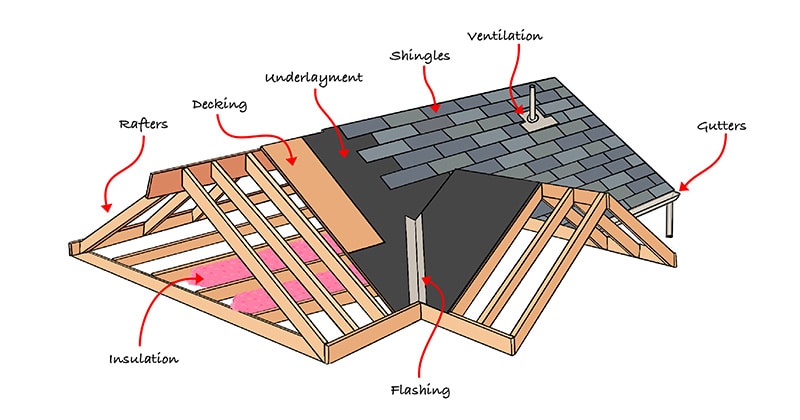
A roofing system is more than just the outer layer you see from the street. It’s a multi-part structure designed to protect a building from weather, regulate temperature, and support long-term durability. For homeowners and first-time builders, understanding the basics helps you make informed decisions, avoid costly mistakes, and communicate clearly with contractors.
What Is a Roofing System?
A roofing system includes all components that work together to shield a structure. It is engineered to manage water runoff, resist wind uplift, and handle temperature changes throughout the year.
Core Components of a Roofing System
-
Roof Decking – The structural base, usually plywood or oriented strand board (OSB)
-
Underlayment – A moisture-resistant barrier placed above the decking
-
Roof Covering – The visible material such as shingles, metal, or membranes
-
Flashing – Thin metal pieces that prevent leaks around joints and penetrations
-
Ventilation System – Allows airflow to control heat and moisture buildup
Each layer plays a specific role. Removing or compromising one part weakens the entire system.
Common Types of Roofing Systems
Different buildings and climates require different roofing solutions. Below are the most common systems used in residential construction.
Asphalt Shingle Roofs
Asphalt shingles are the most widely used roofing material due to affordability and ease of installation.
-
Cost-effective and readily available
-
Suitable for many architectural styles
-
Typical lifespan ranges from 20–30 years
Metal Roofing Systems
Metal roofs are known for durability and energy efficiency.
-
Resistant to fire, wind, and impact
-
Reflects solar heat, reducing cooling costs
-
Can last 40–70 years with proper maintenance
Tile Roofing Systems
Tile roofs, commonly made from clay or concrete, are valued for longevity and aesthetics.
-
Excellent for hot and dry climates
-
Heavy material requiring strong structural support
-
Lifespan often exceeds 50 years
Flat and Low-Slope Roofing
Flat roofs are common on modern homes and commercial buildings.
-
Uses membranes like modified bitumen or single-ply systems
-
Requires precise drainage design
-
Easier access for inspections and repairs
How Climate Affects Roofing Choices
Climate plays a critical role in selecting the right roofing system. Materials react differently to heat, cold, moisture, and wind.
-
Hot climates benefit from reflective and ventilated systems
-
Cold regions require materials resistant to ice dams and freeze-thaw cycles
-
Storm-prone areas need high wind ratings and secure fastening methods
Choosing a roof without considering local weather conditions often leads to premature failure.
Roof Ventilation and Insulation Basics
Ventilation and insulation work together to protect both the roof and the interior living space.
Why Ventilation Matters
Proper airflow helps to:
-
Reduce heat buildup in the attic
-
Prevent moisture accumulation and mold growth
-
Extend the lifespan of roofing materials
Role of Insulation
Insulation minimizes heat transfer between the roof and interior spaces, improving energy efficiency and indoor comfort.
Signs Your Roofing System Needs Attention
Even well-installed roofs require monitoring. Early detection of problems can prevent structural damage.
-
Missing or curled shingles
-
Water stains on ceilings or walls
-
Sagging rooflines
-
Excessive granules in gutters
Addressing these signs promptly reduces repair costs and protects the home’s value.
Choosing the Right Roofing System for Your Home
When selecting a roofing system, consider more than appearance.
Key factors to evaluate include:
-
Budget and long-term cost
-
Expected lifespan
-
Maintenance requirements
-
Local building codes
-
Architectural compatibility
A balanced decision weighs both immediate affordability and long-term performance.
FAQs
1. How long does a typical roofing system last?
The lifespan varies by material, installation quality, climate exposure, and maintenance practices.
2. Can I install a new roof over an existing one?
In some cases, yes, but structural condition and local codes determine whether it’s allowed.
3. What is the most environmentally friendly roofing option?
Eco-friendly options include recyclable materials and systems designed to improve energy efficiency.
4. How often should a roof be inspected?
Professional inspections are generally recommended annually and after major storms.
5. Does roof color affect energy efficiency?
Color can influence heat absorption, which may impact indoor temperatures and cooling costs.
6. Are roofing warranties transferable to new homeowners?
Transferability depends on the manufacturer and installer’s warranty terms.
7. What causes premature roof failure?
Poor installation, inadequate ventilation, low-quality materials, and neglected maintenance are common causes.